
Various Light Houses in Singapore to Know
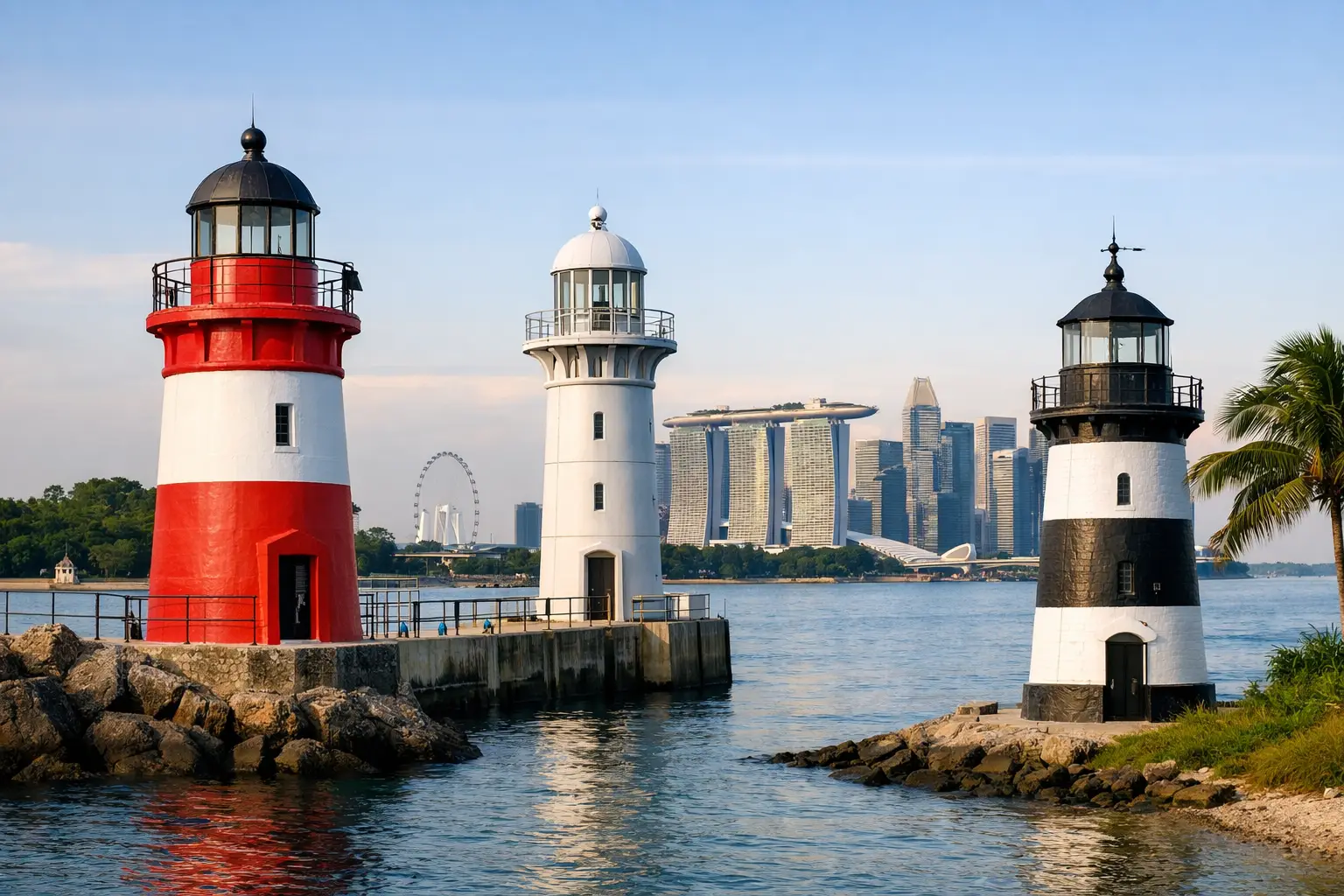
A Singapore skyline cruise can feel all glass, steel, and city sparkle until a lighthouse enters the frame. Suddenly, the view shifts. You are not just looking at modern waterfronts anymore. You are looking at markers that helped ships read these waters long before rooftop bars and marina lights. If you are curious about various light houses in Singapore, it helps to know that each one tells a different story about trade, navigation, and the shape of the island itself.
Why the various light houses in Singapore still matter
Singapore is one of the busiest maritime hubs in the world, so its lighthouses were never ornamental. They were practical answers to a serious problem – how to guide vessels safely through narrow channels, reefs, and busy approaches. That function still matters, even if modern navigation systems now do much of the heavy lifting.
What makes Singapore especially interesting is scale. You will not find a long list of towering lighthouse monuments spread across a dramatic coastline. Instead, the country’s lighthouse story is compact, strategic, and tied closely to offshore islands, historic shipping routes, and port development. For visitors, that means the experience is less about lighthouse road-tripping and more about understanding how a few key sites shaped movement across the water.
The best-known lighthouse in Singapore
Raffles Lighthouse
If one lighthouse defines Singapore in the public imagination, it is Raffles Lighthouse. Located on Pulau Satumu, near the western approaches to Singapore Strait, it has long served as a crucial navigational aid for ships entering one of the world’s busiest sea lanes.
Built in the 19th century, Raffles Lighthouse carries the weight of maritime history without needing much embellishment. Its importance comes from position and purpose. The waters around Singapore have always been commercially vital, but they are also complicated. A well-placed light could reduce risk, improve confidence, and support the flow of trade that helped build the nation.
For most people, Raffles Lighthouse is more famous than accessible. Pulau Satumu is not a casual stop for the average weekend visitor, and that exclusivity adds to its mystique. It is admired more often as a symbol than as a walk-up attraction. If your goal is to physically visit every lighthouse, Singapore can be limiting. If your goal is to appreciate their role from the water and in context, it becomes much more rewarding.
Other various light houses in Singapore worth knowing
Sultan Shoal Lighthouse
Sultan Shoal Lighthouse is the one many lighthouse enthusiasts find especially compelling. Located off Singapore’s southwestern coast, it sits in a setting that feels more exposed and atmospheric than the city center might suggest. There is a quiet dignity to it – a working maritime structure holding its ground amid changing port infrastructure and land reclamation.
Historically, Sultan Shoal Lighthouse helped vessels navigate approaches where shallow waters created real hazards. That practical role gave it a lasting place in Singapore’s maritime network. Over time, it also became part of a broader conversation about preservation. As Singapore evolves, structures like this raise a familiar question: how do you keep history visible in a place that is always making room for what comes next?
That tension is part of what makes Sultan Shoal Lighthouse memorable. It is not just a navigational marker. It is a reminder that Singapore’s relationship with the sea is older than its most recognizable modern landmarks.
Bedok Lighthouse
Bedok Lighthouse is different from the classic image many people have in mind. If you are expecting an isolated white tower on a remote island, this is not that. Bedok Lighthouse is integrated into the urban fabric on the eastern side of Singapore, guiding vessels near the approaches to East Coast waters.
Its appeal is partly in that contrast. It shows how Singapore treats maritime infrastructure as something embedded within daily life, not pushed to the edges and forgotten. Bedok Lighthouse may not deliver the romance of a remote beacon, but it reflects the country accurately – efficient, compact, and always balancing land use with maritime function.
For casual visitors, Bedok is easier to contextualize than to mythologize. You are seeing a lighthouse that belongs to a living city, not a museum postcard. That makes it less dramatic, perhaps, but more honest.
Fullerton Lighthouse
Fullerton Lighthouse is often overlooked in conversations about Singapore’s lighthouses because it does not fit the older standalone model. It was installed atop the Fullerton Building, at the mouth of the Singapore River, and served as a harbor light in a deeply commercial part of the city.
Its story matters because it reflects a different chapter of maritime development. Rather than warning ships near reefs or outer approaches, Fullerton Lighthouse supported navigation in the heart of colonial and commercial Singapore. It was part of a working waterfront where goods, people, and administration converged.
Today, when visitors admire the area around Marina Bay and the historic civic district, it is easy to miss that this polished setting was once intensely utilitarian. Fullerton Lighthouse helps bridge those two identities.
What makes Singapore’s lighthouse scene different
Singapore does not compete with larger countries on lighthouse quantity. The appeal here is precision. Each site is tied to a clear navigational purpose, and each reveals something about how the island developed.
That also means expectations matter. If you want a trip built around hiking to scenic lighthouse cliffs, Singapore is the wrong destination. If you enjoy maritime history, coastal infrastructure, and seeing how a global port operates, the experience is much richer. The reward is intellectual as much as visual.
This is also where timing changes everything. Some lighthouse views are more striking at golden hour, when the city softens and the sea takes on more texture. Others make the strongest impression from a boat, where distance and angle help you understand why the light was placed there in the first place.
Seeing lighthouses from the water
The best way to appreciate several of these landmarks is not always on land. From the water, Singapore’s maritime geography becomes easier to read. You start noticing channels, industrial edges, offshore islands, and the relationship between old navigation aids and present-day shipping activity.
For celebrations, corporate outings, or a private day on the water, that perspective can elevate the whole experience. A yacht charter is not just about the city skyline or a sunset toast, though those are hard to beat. It also lets guests experience Singapore as a port city, with details that stay hidden from land-based itineraries. For anyone planning a more personal or polished time on the water, White Sails offers private yacht charters designed around comfort, occasion, and service. You can explore options at www.whitesails.com.sg or Whatsapp 86617600 to book your yacht.
The trade-off, of course, is that not every lighthouse is equally visible or accessible on a leisure route. Operational realities, weather, and maritime traffic all shape what is practical. That does not lessen the experience. It simply means the most satisfying approach is to treat lighthouse viewing as part of a broader on-water appreciation of Singapore.
A few common questions travelers have
Can you visit every lighthouse in Singapore?
Not easily. Some are on offshore sites with restricted access or limited public visitation. Singapore’s lighthouses are best approached with realistic expectations. Think of them as maritime landmarks to understand and appreciate, not all as tourist attractions with open doors.
Which lighthouse is the most historically important?
Raffles Lighthouse usually gets that distinction because of its role in guiding ships through major western approaches. But historical importance depends on what you value. Sultan Shoal Lighthouse is significant in its own right, and Fullerton Lighthouse tells a strong story about the commercial core of old Singapore.
Are Singapore’s lighthouses worth seeking out if you are not a history buff?
Yes, if you enjoy place-based stories. Lighthouses make the water feel legible. They help explain why ships move where they do, why certain islands mattered, and how Singapore became what it is. Even a short glimpse can add depth to a harbor view.
The most satisfying way to think about Singapore’s lighthouses is not as a checklist, but as anchors for seeing the island differently. They stand at the meeting point of history, trade, and travel. Once you notice them, the water around Singapore stops feeling like background scenery and starts feeling like the main event.